
MCAT Biochemistry · Lesson 4
Carbohydrate Structure and Function
3 min read4 sectionsUpdated
4 sections
4.1 Carb Classification
This section outlines the basic classification and nomenclature of carbohydrates, including monosaccharides, stereochemistry, and common structural variations.
- Nomenclature
- Basic structural units are monosaccharides.
- Simplest has 3 carbons: triose; 4: tetrose; 5: pentose; 6: hexose.
- Aldoses: carbohydrates with aldehyde as most oxidized group.
- Ketoses: carbohydrates with ketone as most oxidized group.
- 6-carbon sugar with aldehyde = aldohexose.
- Glyceraldehyde = aldotriose, polyhydroxylated aldehyde; carbonyl carbon most oxidized (lowest number, C1 in aldose).
- Can participate in glycosidic linkages; sugars = glycosyl residues.
- Simplest ketose = dihydroxyacetone; carbonyl carbon C2.
- Common Names
- Mannose = C1 epimer of glucose.
- Galactose = C4 epimer.
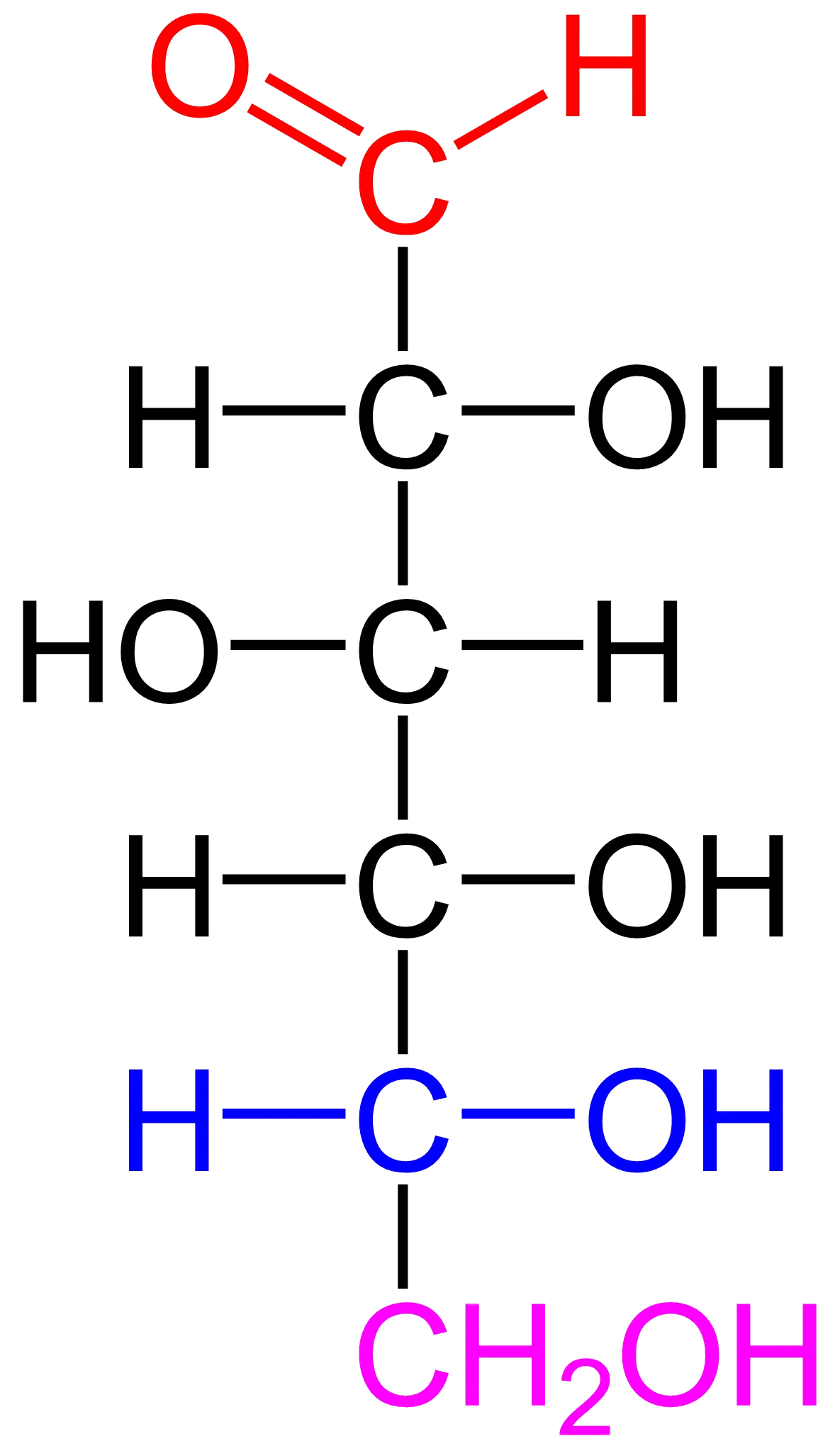
- D-glucose: all OH on right except C3; aldohexose.
- In aldoses, each nonterminal C is chiral; glucose has 4 chiral carbons, 2 terminals.
- Stereochemistry
- Optical isomers = stereoisomers; same chemical formula.
- Enantiomers = nonidentical, nonsuperimposable mirror images (D and L glyceraldehyde).
- 2 enantiomers per chiral carbon; stereoisomers = 2^n (n = number of chiral centers).
- D = positive rotation, L = negative; rotation determined experimentally.
- Fisher Projection
- Horizontal lines = wedges (out), vertical = dash (into).
- Chiral centers of D-glucose opposite L-glucose.
- D-glucose (below)
- Types
- Enantiomers: same sugar, different optical families.
- Diastereomer: same family, not mirror images.
- Epimer: diastereomer differing at only one chiral center.
4.2 Cyclic Sugar Molecules
Monosaccharides cyclize to form stable hemiacetals or hemiketals, producing alpha and beta anomers with specific stereochemistry and conformations.
- Monosaccharides have hydroxyl group, act as nucleophile.
- Hemiacetals from aldoses, hemiketals from ketoses.
- Stable cyclic forms: pyranose (6-membered) or furanose (5-membered).
- Carbonyl carbon becomes chiral → anomeric carbon.
- Two ring forms: alpha (-OH trans to CH2OH) and beta (-OH cis to CH2OH); anomers of each other.
- Hexose Conformations
- Haworth projection: 3D cyclic structure.
- Pyranose rings adopt chair conformation.
- Right-side Fischer groups point down in Haworth.
- Mutarotation
- Rings in water cycle between open and closed forms → alpha and beta anomers.
- Spontaneous change catalyzed by acid/base.
- Alpha less favored (axial OH) → strain; beta more stable (less e⁻ repulsion).
4.3 Monosaccharides
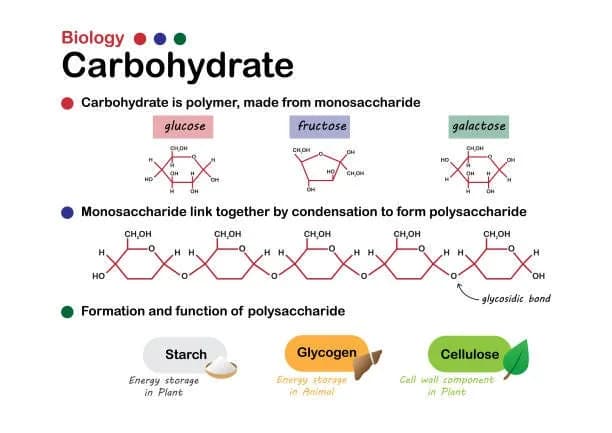
Monosaccharides undergo oxidation, reduction, esterification, and glycoside formation, with specific reagents used to detect reducing sugars.
- Oxidation and Reduction
- Oxidation yields energy; aldoses oxidized to aldonic acids.
- Aldoses act as reducing agents; ring form oxidation → lactone (e.g., vitamin C).
- Reagents for reducing sugars
- Tollens: AgNO3 + NaOH → Ag2O, dissolve in NH3 → [Ag(NH3)2]⁺; aldehyde → silver mirror.
- Benedict’s: oxidizes aldehyde → red Cu2O precipitate.
- Glucose oxidase: specific to glucose.
- Ketose sugars also reducing: tautomerize under basic conditions → aldose (keto-enol shift).
- Aldose reduced → alditol; deoxy sugar = H replaces OH (e.g., D-2-deoxyribose in DNA).
- Esterification
- OH groups react with COOH/derivatives → esters.
- Phosphorylation: phosphate from ATP → glucose (hexokinase).
- Glycoside Formation
- Hemiacetals → acetals (alpha/beta) via dehydration; water leaves.
- C-O bond = glycosidic bond.
- Di/polysaccharides = glycosidic bonds between monosaccharides.
- Furanose → furanosides; pyranose → pyranosides.
- Hydrolysis required to break bonds.
4.4 Complex Carbohydrates
Complex carbohydrates include di-, oligo-, and polysaccharides, with structural diversity determined by glycosidic linkages and branching.
- Disaccharides
- Glycosidic bonds: 1,2; 1,4; 1,6 linkages.
- Linkage named for anomeric carbon of first sugar.
- Alpha 1,4: maltose; beta 1,4: cellobiose.
- Common examples:
- Sucrose = glucose α1,2 fructose
- Maltose = glucose α1,4 glucose
- Lactose = galactose β1,4 glucose
- Polysaccharides
- Long chains of monosaccharides; glucose most common.
- Homopolysaccharide: one type of sugar; heteropolysaccharide: multiple types.
- Linear vs. branched: branching occurs when monosaccharide forms 2 glycosidic bonds.
- Cellulose
- Beta D-glucose linked β1,4; H-bonds stabilize.
- Structural in plants; humans can't digest (fiber in diet).
- Cellulase in termites, cows, goats.
- Starches
- Alpha D-glucose monomers; digestible.
- Amylose: linear α1,4; amylopectin: α1,4 + α1,6.
- Iodine test fits in amylose helix.
- Beta amylase cleaves nonreducing end → maltose; alpha amylase cleaves randomly.
- Debranching enzymes for amylopectin.
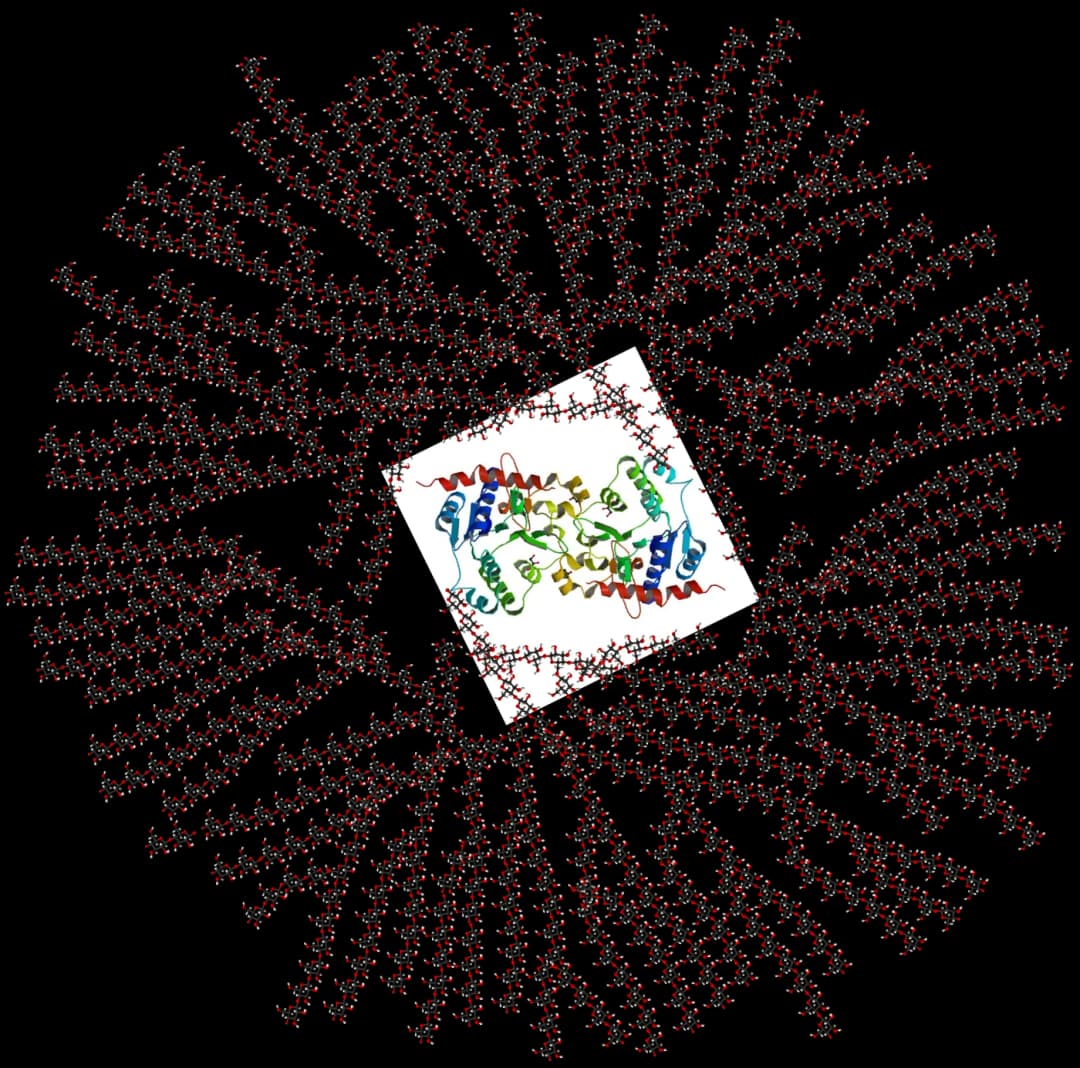
- Glycogen
- More α1,6 branching than starch (1/10 glucose vs. 1/25 in amylopectin).
- Branching → solubility ↑, energy efficiency ↑.
- Glycogen phosphorylase cleaves from nonreducing ends → glucose 1-phosphate.
- Deficiency → GSD VI: glycogen accumulation, hypoglycemia.
Spotted something wrong or unclear? Tell us — these notes are revised continuously.