
MCAT Organic Chemistry · Lesson 5
Alcohols
2 min read3 sectionsUpdated
3 sections
5.1 Description and Properties of Alcohols
This section introduces alcohols, their nomenclature, and physical properties. It highlights acidity trends, hydrogen bonding, and substituent effects on stability and reactivity.
- Ethanol popular for 10,000 years
- Strictly ethanol; methanol = blindness
Nomenclature
- Alcohols have formula ; -OH referred to as hydroxyl group
- IUPAC naming: replace -e with -ol
- If highest priority, carbon has lowest number possible
- Naming branches: start with alcohol
- Alkyl group as derivative, followed by alcohol (e.g., ethyl alcohol, isobutyl alcohol)
- If not highest priority group: substituent as hydroxy-
- Alcohol with aromatic ring = phenol
- OH group partially acidic

- OH group partially acidic
- Benzene ring with 2 substituents:
- Ortho = adjacent
- Meta = 1 carbon between
- Para = opposite sides
Physical properties
- Can H bond → high melting and boiling points (longer chain = more London dispersion forces → higher BP)
- More than one OH group → more bonding
- O atom pulls e⁻ density away from H → generates partial positive charge
- Hydroxyl hydrogens of phenols more acidic than other alcohols → phenols form salts with inorganic bases like NaOH
- E⁻ withdrawing substituents → increase acidity
- E⁻ donating groups → decrease acidity
- More alkyl groups → less acidic (donate e⁻, destabilize negative charge, stabilize positive charge)
5.2 Reactions of Alcohols
This section describes oxidation reactions of alcohols, formation of mesylates/tosylates, and the use of alcohols as protecting groups.
Oxidation reactions
- Primary alcohols → aldehydes via pyridinium chlorochromate (PCC)
- Stops at aldehyde because PCC lacks water
- Aldehydes hydrate to geminal diols (1,1-diols) → can oxidize to carboxylic acids
- PCC converts -OH → =O
- Secondary alcohols → ketones via PCC or other oxidizing agents
- Tertiary alcohols cannot oxidize without breaking C-C bond
- Strong oxidizing agents (Chromium VI) → carboxylic acids
- Chromium VI reduced to Chromium III
- Examples: CrO₃, Jones oxidation (primary alcohol → carboxylic acid, secondary → ketone)
Mesylates and Tosylates
- Hydroxyl groups protonated → better leaving groups
- Mesylate: -SO₃CH₃
- Prepared using methyl sulfonyl chloride + alcohol + base

- Tosylate: -SO₃C₆H₄CH₃
- From p-toluenesulfonyl chloride
- Structure: Benzene - S(=O)₂ - O-R

- Can protect groups to prevent alcohol from reacting
Protecting Groups
- Alcohols protect other functional groups
- Aldehydes/ketones + 2 eq alcohol/diol → acetals (primary C-OR)₂ or ketals (secondary C-OR)₂
- Acetals/ketals do not react with LAH
- Deprotection: revert to carbonyl using aqueous acid
5.3 Reactions of Phenols
This section covers the oxidation of phenols to quinones and hydroxyquinones, their properties, and biological relevance.
Quinones and Hydroxyquinones
- Phenols + oxidizing agents → quinones
- Resonance stabilized electrophiles
- Not aromatic, conjugated ring structure
- Serve as e⁻ acceptors
- (benzoquinone)

- Vitamin K1 (phylloquinone) important for photosynthesis, clotting factor carboxylation
- Hydroxyquinones: further oxidized quinones
- Same ring & carbonyl backbone, more hydroxyl groups
- Slightly less electrophilic
- Number of hydroxyl groups indicated by prefix or hydroxy-

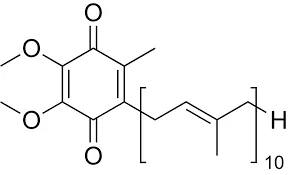
Ubiquinone
- Coenzyme Q, vital e⁻ carrier
- Most oxidized form; reduced to ubiquinol upon e⁻ acceptance
- Conjugated rings stabilize molecule during e⁻ transport
- Lipid-soluble due to alkyl chain
- Functions similarly to NADH, FADH₂, and NADPH
Spotted something wrong or unclear? Tell us — these notes are revised continuously.