
MCAT Biochemistry · Lesson 6
DNA and Biotechnology
4 min read5 sectionsUpdated
5 sections
6.1 DNA Structure
This section covers the basic structure of DNA and RNA, including nucleosides, nucleotides, sugar-phosphate backbone, purines/pyrimidines, Watson-Crick model, DNA denaturation, and reannealing.
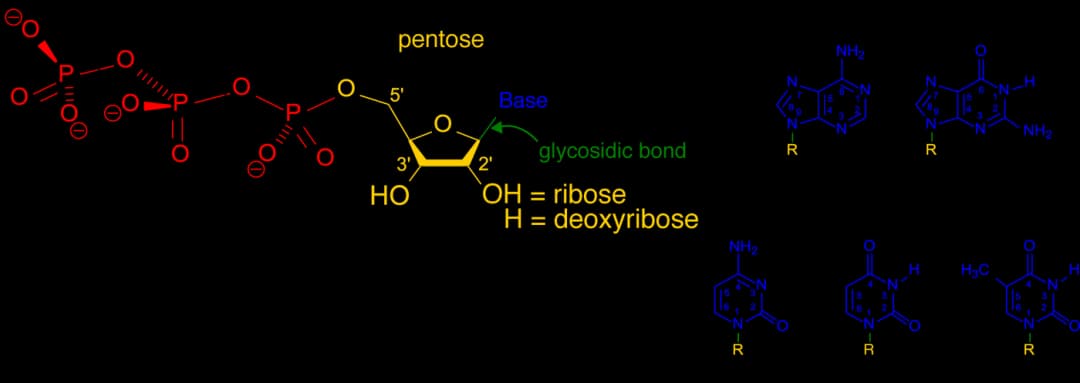
- Nucleosides and Nucleotides
- Nucleosides = pentose sugar + nitrogenous base (linked to C1').
- Nucleotides = nucleoside + phosphate group (attached to C5').
- RNA: ribose (2' OH); DNA: deoxyribose (2' H).
- Example: Adenine → adenosine; AMP = nucleotide.
- Sugar-Phosphate Backbone
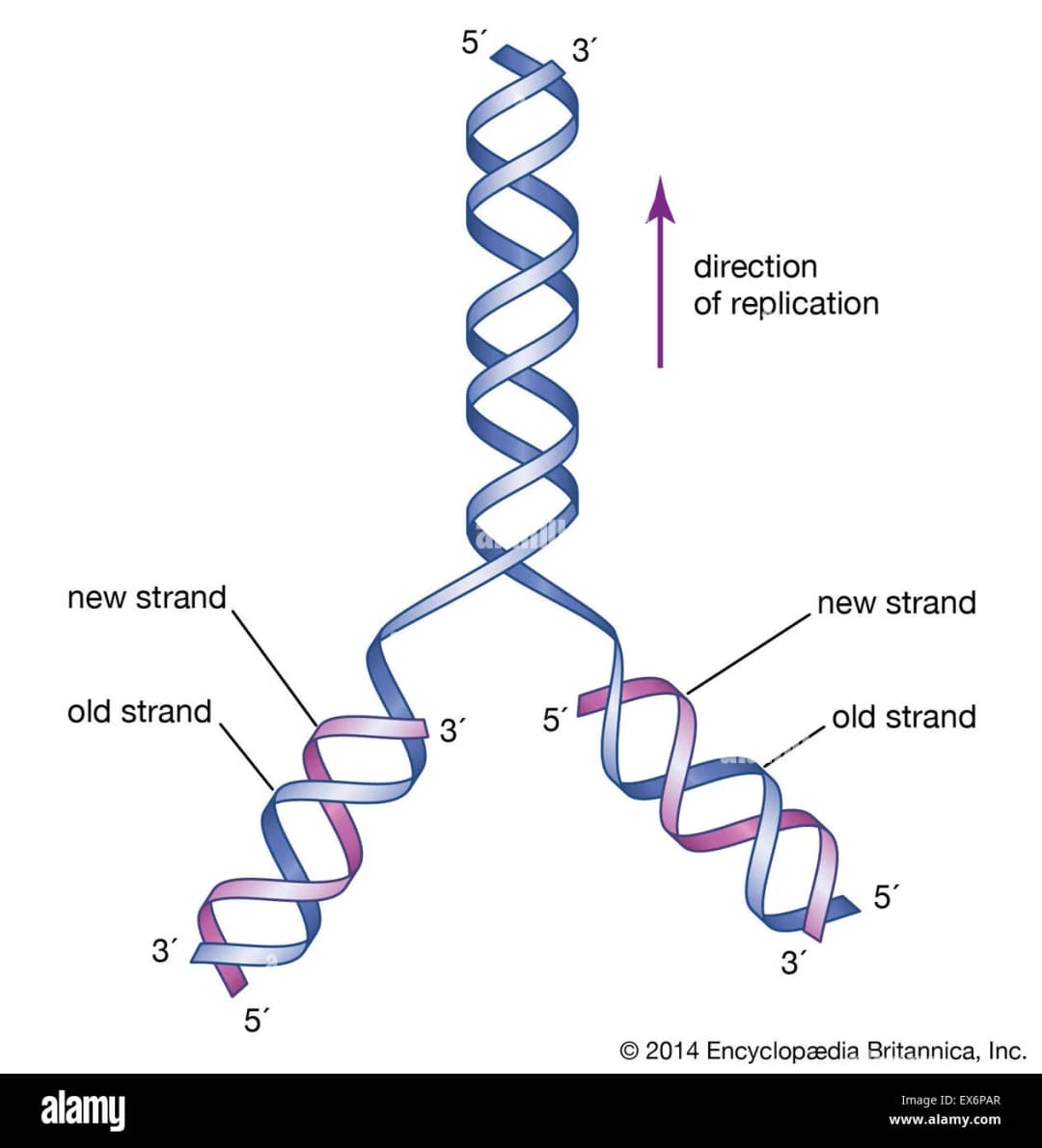
- Alternating sugar & phosphate groups.
- Directionality: 5' → 3'.
- Nucleotides joined by 3'→5' phosphodiester bonds.
- 5' end: OH or phosphate on C5'.
- 3' end: free OH on C3'.
- dsDNA = double stranded; sRNA = single stranded.
- Purines and Pyrimidines
- Purines: 2 rings (A & G).
- Pyrimidines: 1 ring (C, T, U).
- Aromatic, cyclic, planar, conjugated (Hückel's rule: 4n+2 π e⁻).
- N atoms confer stability.
- Watson and Crick Model
- 1953: double helix, antiparallel, complementary base pairing.
- Chargaff’s rules: A=T, C=G.
- B-DNA: right-handed, 3.4 nm turn, 10 bp per turn; major/minor grooves.
- Z-DNA: left-handed, zigzag, 12 bp per 4.6 nm; high GC/salt.
- Denaturation and Reannealing
- Denatured by heat, high pH, chemicals.
- Reannealed if denaturant removed.
- Important for PCR; probe DNA binds target sequences.
6.2 Eukaryotic Chromosome Organization
Describes the packaging of eukaryotic DNA, histones, nucleosomes, chromatin types, telomeres, and centromeres.
- Histones
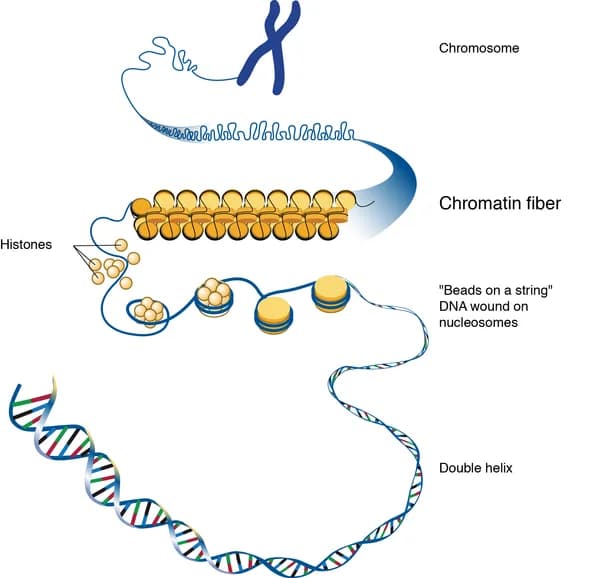
- DNA wrapped around basic histone proteins → chromatin.
- 5 histone types: H2A, H2B, H3, H4 (2 copies → histone core), H1.
- 200 bp wrapped → nucleosome ("beads on a string").
- Histones = nucleoproteins.
- Heterochromatin vs Euchromatin
- Heterochromatin: compact, dark, transcriptionally silent.
- Euchromatin: dispersed, light, active transcription.
- Telomeres
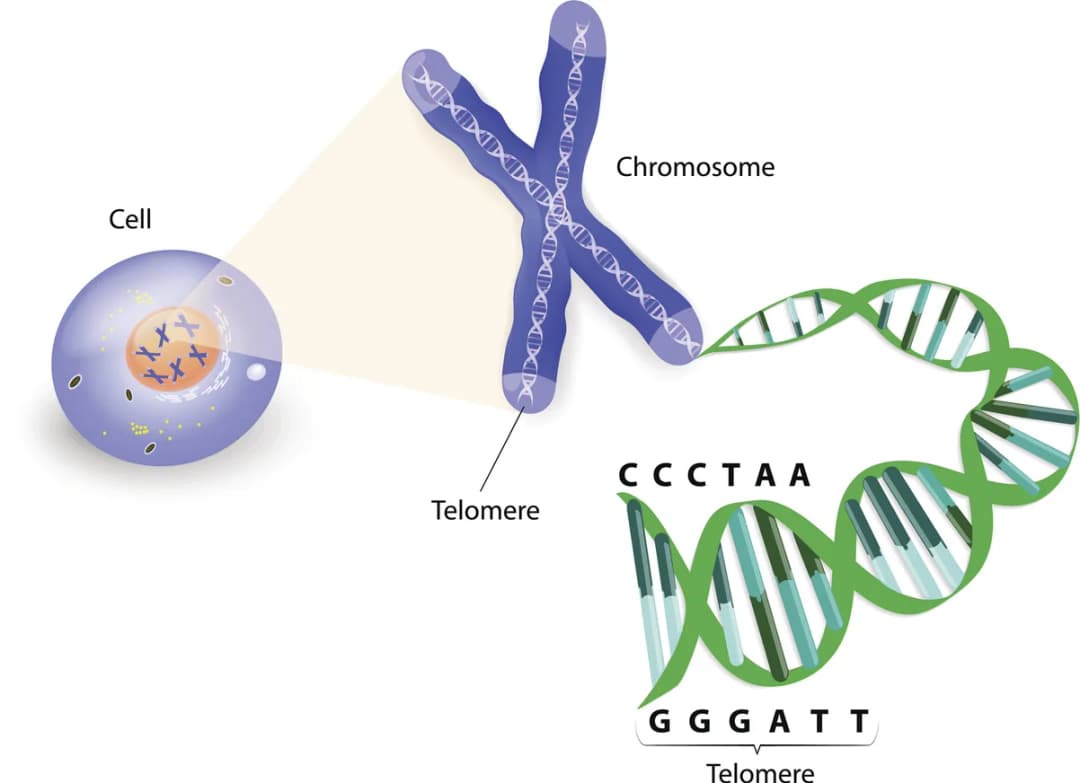
- Repeating sequence: TTAGGG at DNA ends.
- Prevent loss of info; replaced by telomerase.
- High GC content → stable.
- Progressive shortening → aging
- Centromeres
- DNA region at chromosome center; site of constriction.
- Composed of heterochromatin; high GC tandem repeats.
- Sister chromatids remain connected until microtubules separate.
6.3 DNA Replication
Covers the mechanisms of DNA replication including origin of replication, helicase activity, DNA polymerases, leading/lagging strands, Okazaki fragments, and replication of chromosome ends.
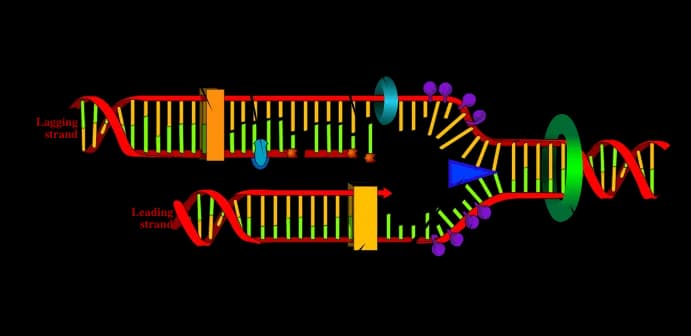
- Strand Separation
- Origins of replication: unwinding DNA → replication forks.
- Bacteria: circular, single origin → 2 forks.
- Eukaryotes: linear, multiple origins → sister chromatids.
- Helicase & Topoisomerase
- Helicase unwinds DNA → single-stranded templates.
- Positive supercoiling occurs → topoisomerase introduces negative supercoils.
- Single-strand binding proteins prevent reassociation/degradation.
- Parent & Daughter Strands
- Semiconservative replication.
- DNA pol reads 3'→5', synthesizes 5'→3'.
- Leading strand: continuous replication.
- Lagging strand: discontinuous → Okazaki fragments.
- Replication Steps
- Primase lays RNA primer.
- DNA pol III/α/δ synthesize daughter strands.
- DNA pol I/RNase H remove RNA primer.
- DNA pol I/δ fill in nucleotides.
- DNA ligase seals fragments.
- Eukaryotic DNA pol
- α, δ, ε: nuclear replication.
- γ: mitochondrial DNA.
- β, ε: DNA repair.
- δ & ε assisted by PCNA (sliding clamp).
- Replicating Chromosome Ends
- DNA pol cannot complete 5' ends → telomere shortening.
6.4 DNA Repair
Discusses types of DNA damage, oncogenes/tumor suppressors, and mechanisms of repair including proofreading, mismatch repair, nucleotide/base excision repair.
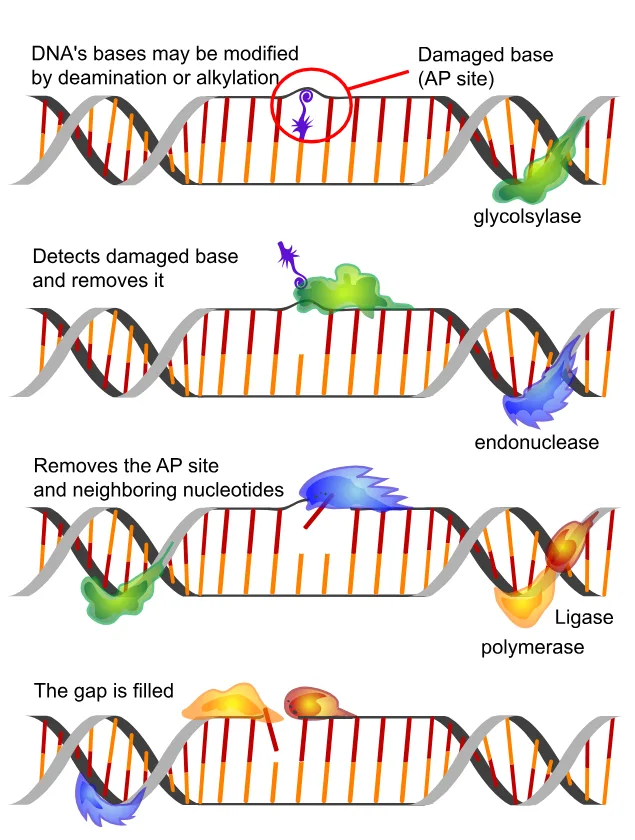
- DNA Damage
- Causes: chemicals, radiation, backbone break, base alterations, replication errors → ↑ cancer risk.
- Oncogenes & Tumor Suppressors
- Oncogenes: mutated proto-oncogenes → dominant, promote proliferation.
- Tumor suppressors: inhibit cell cycle (e.g., p53, Rb); loss → cancer.
- Proofreading & Mismatch Repair
- DNA pol proofreading: detects unstable H bonds; template strand methylated.
- Mutations higher in lagging strand.
- Mismatch repair: G2 machinery (MSH2, MLH1) fixes replication errors missed in S phase.
- Nucleotide & Base Excision Repair
- Nucleotide: UV-induced thymine dimers → excision endonuclease, DNA pol, ligase.
- Base: small base modifications (e.g., C→U) → glycosylase removes base → AP site → AP endonuclease → DNA pol & ligase fill/repair.
6.5 Recombinant DNA and Biotech
Explains recombinant DNA technology, cloning, restriction enzymes, DNA libraries, PCR, gel electrophoresis, DNA sequencing, gene therapy, transgenic mice, and associated ethical concerns.
- Recombinant DNA Technology
- Multiply DNA fragments via cloning or PCR.
- Alters genes/proteins; source for recombinant proteins (e.g., insulin).
- DNA Cloning & Restriction Enzymes
- DNA ligated into vector → recombinant vector.
- Vectors: bacterial/viral plasmids → transferred to host → colonies → express gene.
- Restriction enzymes: recognize specific sequences; can create sticky ends.
- DNA Libraries
- Genomic: coding + noncoding DNA fragments.
- cDNA: reverse transcribed from RNA → only expressed sequences (expression library).
- Hybridization
- Complementary base pairing using single-stranded sequences.
- PCR
- Amplifies DNA millions of times; requires primers, heat, reannealing.
- High GC content primers → stable.
- Southern Blot & Gel Electrophoresis
- Agarose gel separates DNA by size/charge.
- Southern blot: cut fragments → membrane → labeled probe binds complementary DNA.
- DNA Sequencing
- Dideoxy nucleotides (ddATP, ddCTP, etc.) terminate chain.
- Fragments separated by size → sequence determined.
- Applications
- Gene Therapy: normal gene introduced to correct mutation; virus vectors common; risk of oncogene activation.
- Transgenic Mice: cloned gene (transgene) microinjected into fertilized ova or stem cells; passed to offspring.
- Chimera formation if stem cells mixed with blastocytes.
- Knockout mice: gene deletion → disease study.
- Safety & Ethics
- Risks: pregnancy termination, privacy concerns, consent for subjects unable to communicate.
Spotted something wrong or unclear? Tell us — these notes are revised continuously.