
MCAT Biology · Lesson 9
Digestive System
6 min read4 sectionsUpdated
4 sections
9.1 Anatomy of the Digestive System
This section distinguishes intracellular vs extracellular digestion, defines digestion vs absorption, and gives the overall layout of the alimentary canal plus enteric nervous system control.
- Intracellular digestion (metabolism)
- Oxidation of glucose and fatty acids for energy
- Extracellular digestion
- Process where nutrients obtained from food
- Occurs in lumen of alimentary canal
- Outside body, since lumen of GI goes outside
- Runs from mouth to anus, sectioned by sphincters
- Digestion
- Breakdown of food into constituent organic molecules
- Mechanical
- Physical breakdown of food
- Chemical
- Enzymatic cleavage of pods
- Absorption
- Transport of products of digestion from tract into circulatory system for distribution
- Tract anatomy
- Begins with oral cavity → pharynx → esophagus
- Stomach → small intestine → large intestine
- Waste goes to rectum
- Enteric nervous system
- neurons that govern GI system
- Present in walls, trigger peristalsis (contractions of tube) to move food
- Can function independently of brain and spinal chord
- Regulated by ANS
9.2 Ingestion and Digestion
This section follows food from mouth to duodenum, covering mechanical/chemical digestion, key enzymes and cells in the stomach, and major small-intestine hormones + bile roles.
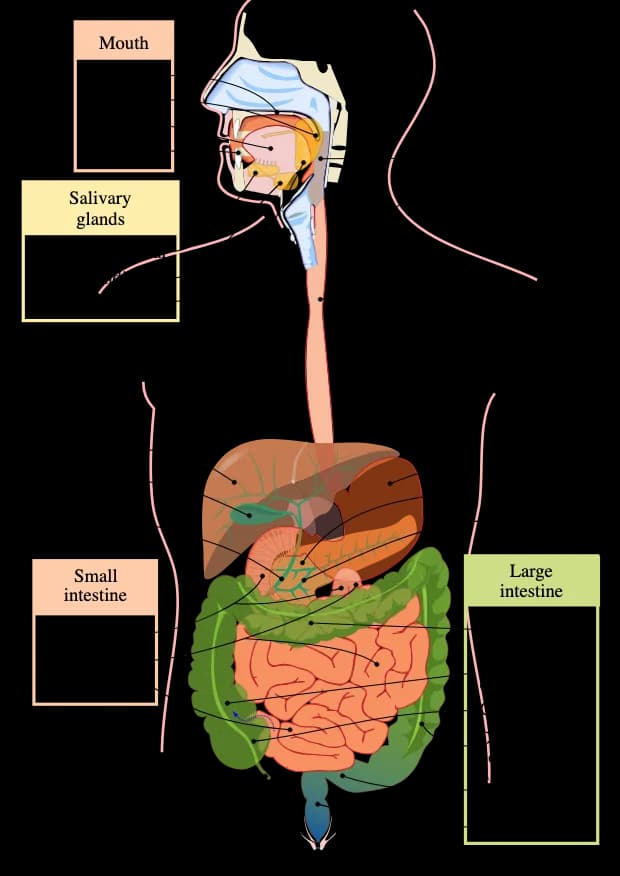
- Ingest food for nutrients
- Oral cavity
- Role in mechanical and chemical digestion of food
- Mastication (chewing) = mechanical digestion
- Increases SA/V ratio → more surface area for digestion
- Saliva from 3 pairs of salivary glands aids mechanical digestion
- Salivary amylase hydrolyzes starch into sugar (so does pancreatic amylase)
- Lipase hydrolyzes lipids
- Tongue forms food into bolus → swallowed
- Pharynx
- Cavity leading from mouth and posterior nasal cavity in esophagus
- Nasopharynx = behind nasal cavity
- Oropharynx = back of mouth
- Laryngopharynx = above vocal chords
- Food prevented from entering larynx by epiglottis
- Esophagus
- Muscular tube connecting pharynx to stomach
- Top third = skeletal, bottom third = smooth, middle third = mixture
- Peristalsis proceeds down digestive tract
- Things can cause emesis (vomiting)
- Swallowing initiated in muscles of oropharynx (upper esophageal sphincter
- Bolus to stomach, lower esophageal sphincter (cardiac sphincter) relaxes and opens to allow food
- Stomach
- Muscular, capacity of L
- Located in upper left quadrant
- HCl and enzymes to digest food
- Fundus and body = gastric glands
- Respond to signals from vagus nerve
- Mucous cells = mucus that protects wall from acidic environment
- NSAID's interfere with mucus production
- Gastric juice = chief cells (pepsinogen) and parietal cells (H⁺ ions)
- H cleaves pepsinogen to pepsin
- Pepsin cleaves near aromatic AA
- Most active at low pH
- Parietal cells = intrinsic factor
- Glycoprotein for B12 absorption
- Antrum and pylorus = pyloric glands
- G cells secrete gastrin
- Gastrin induces parietal cells to make more HCl and stomach to contract
- Chyme = semifluid mixture of solid food and acid
- When reaches small intestine, maximizes absorption
- Other stuff
- Internal curvature = less curvature
- External curvature = greater curvature
- Lining of stomach is folds called reggae
- Small Intestine
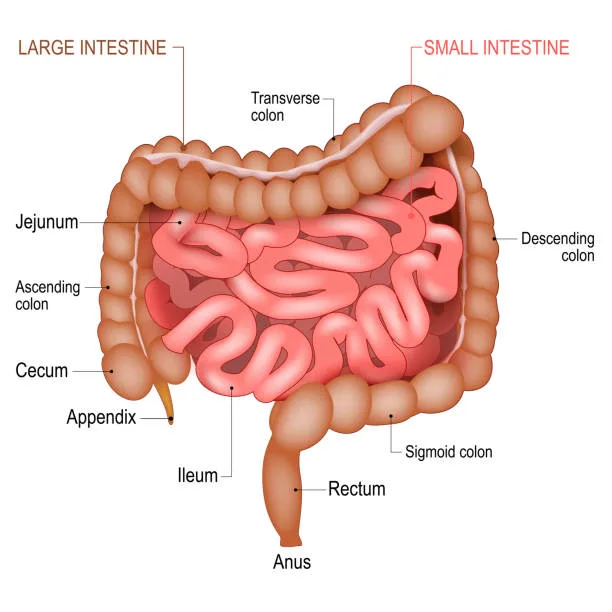
- Small intestine made of duodenum, jejunum, ileum
- m long, duodenum is majority of digestion
- Food leaves through pyloric sphincter → enters duodenum
- Brush border enzymes present on luminal surface → break down dimers and trimers
- Also makes enteropeptidase → activates other enzymes such trypsin
- Lack of particular disaccharidase = can't digest
- Can pull water into stool → diarrhea
- Why lactose intolerant people have so many issues
- Proteins broken down into di or tripeptides and absorbed
- Secretin
- Causes pancreatic enzymes to go into duodenum
- Regulates pH of digestive tract by reducing HCl secretion
- Enterogastrone
- Hormone that slows motility
- Cholecystokinin (CCK)
- Secreted in response to entry of chyme
- Stimulates bile and pancreatic juices from gallbladder and pancreas
- Promotes satiety
- Bile salts
- Help digestion of fats, ultimately of lipids
- Like common soap detergents
- Emulsify fats and cholesterol → micelles
- Without bile, fats not accessible to pancreatic lipase (water soluble)
- Micelles increase SA
- Lipases hydrolyze ester bonds holding lipids together
- Promotes secretion of pancreatic juices
- Mixture of enzymes
- Can digest all 3 types of macromolecules
9.3 Accessory Organs of Digestion
This section covers pancreas, liver, and gallbladder roles—enzyme/bicarb delivery to duodenum, hepatic portal processing, bile composition, and gallbladder storage/release + gallstones risks.
- Pancreas
- Exocrine function is release of hormones like insulin, glucagon, somatostatin
- Exocrine cells called acinar cells produce pancreatic juices
- Bicarb-rich alkaline secretions, containing digestive enzymes
- Pancreatic amylase breaks down large polysaccharides into smaller ones
- Transferred to duodenum via duct system in middle of pancreas
- Ducts empty into duodenum through major and minor duodenal papillae
- Enteropeptidase is master switch
- Activates trypsinogen, procarboxypeptidase
- Makes pancreatic lipase
- Breaks down fats into free fatty acids and glycerol
- Liver
- Upper right quadrant, contains 2 unique structure
- Bile ducts connect liver with gallbladder and small intestine
- Bile made in liver and travels down
- Liver receives all blood draining from abdominal portion of tract through portal vein
- Nutrient-rich blood processed by liver before draining into inferior vena cava
- Liver takes up excess sugar → glycogen, stores fats
- Liver does glycogenesis and gluconeogenesis, makes fats into lipoproteins
- Detoxifies endogenous and exogenous compounds
- Ammonia → urea
- Alcohol and medications
- Some drugs require activation by enzymes
- Bile production is significant job
- Made of salts, pigments, and cholesterol
- Has bilirubin, conjugated and secreted into bile
- Jaundice if you can't process or excrete bilirubin
- Liver makes proteins for body function
- Albumin, clotting factors
- Gallbladder
- Located just beneath liver
- Stores and concentrates bile
- With CCK release:
- Gallbladder contracts and pushes bile out of biliary tree
- Bile duct system merges with pancreatic duct
- Site of cholesterol or bilirubin formation
- Painful, causes inflammation
- Can block pancreatic duct → pancreatitis
9.4 Absorption and Defecation
This section explains small-intestine absorption via villi/microvilli, fat handling into chylomicrons and lymph, plus large-intestine water absorption and the path to feces elimination.
- Jejunum and ileum
- Small intestine has villi; villus have microvilli → increase surface area
- Middle of each villus has capillary bed for absorption
- Also has lacteal (lymphatic channel) that takes up fats
- As blood passes through cells, carry carbs and AA away
- Makes concentration gradient: blood has lower concentration of stuff than inside cells
- Stuff moves from cells into capillaries
- Molecules go to liver via hepatic portal circulation
- Fatty acids can diffuse membrane
- Triglycerides and esterified cholesterol packaged into chylomicrons
- Enter lymphatic system through lacteals
- Lacteals converge and enter circulation at thoracic duct
- Vitamins absorbed here
- Four fat soluble: A D E K
- Can dissolve directly into chylomicrons
- Small intestine absorbs water
- Water in chyme is from secretions
- Secretes L, so must reabsorb stuff
- Large intestine
- Primarily involved in water absorption
- Large diameter but shorter length
- Cecum = out pocket
- Accepts fluid from small intestine through ileocecal valve
- Site of attachment for appendix
- Appendix good for bacterial infections
- Colon divisions:
- Ascending, transverse, descending, sigmoid
- Absorbs water and salts from undigested material
- Intestine absorbs more water than colon, so colon []ates material to form feces
- Rectum = storage site for feces
- Anus = opening where waste eliminated
- Internal and external anal sphincters
Spotted something wrong or unclear? Tell us — these notes are revised continuously.