
MCAT Biology · Lesson 6
Respiratory System
2 min read2 sectionsUpdated
Jump to a section2
2 sections
6.1 Anatomy and Mechanism of Breathing
Describes respiratory tract anatomy, breathing mechanics, lung volumes, and regulation of ventilation.
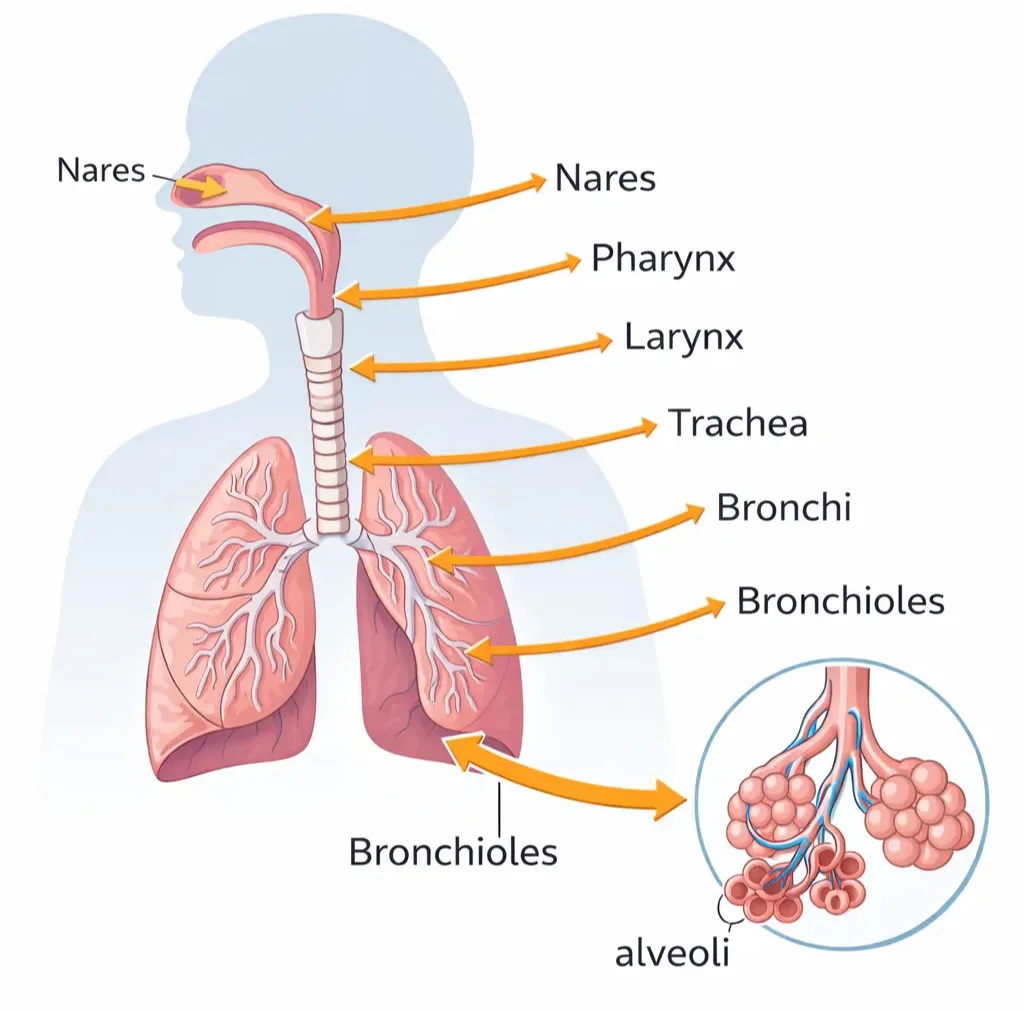
- Anatomy
- Air enters through nares, filtered by vibrissae and mucous
- Passes pharynx → larynx (air only, glottis covered by epiglottis during swallowing)
- 2 vocal cords controlled by skeletal muscle/cartilage
- Trachea → mainstem bronchi → smaller bronchioles → alveoli
- Alveoli covered in surfactant (lowers surface tension, aids gas exchange)
- Lungs in thoracic cavity, surrounded by pleura
- Visceral pleura: adjacent to lung
- Parietal pleura: outer layer
- Diaphragm: separates thoracic & abdominal cavities, under somatic control
- Intercostal muscles assist breathing
- Pathway of Air
- Nares → pharynx → larynx → trachea → bronchi → bronchioles → alveoli
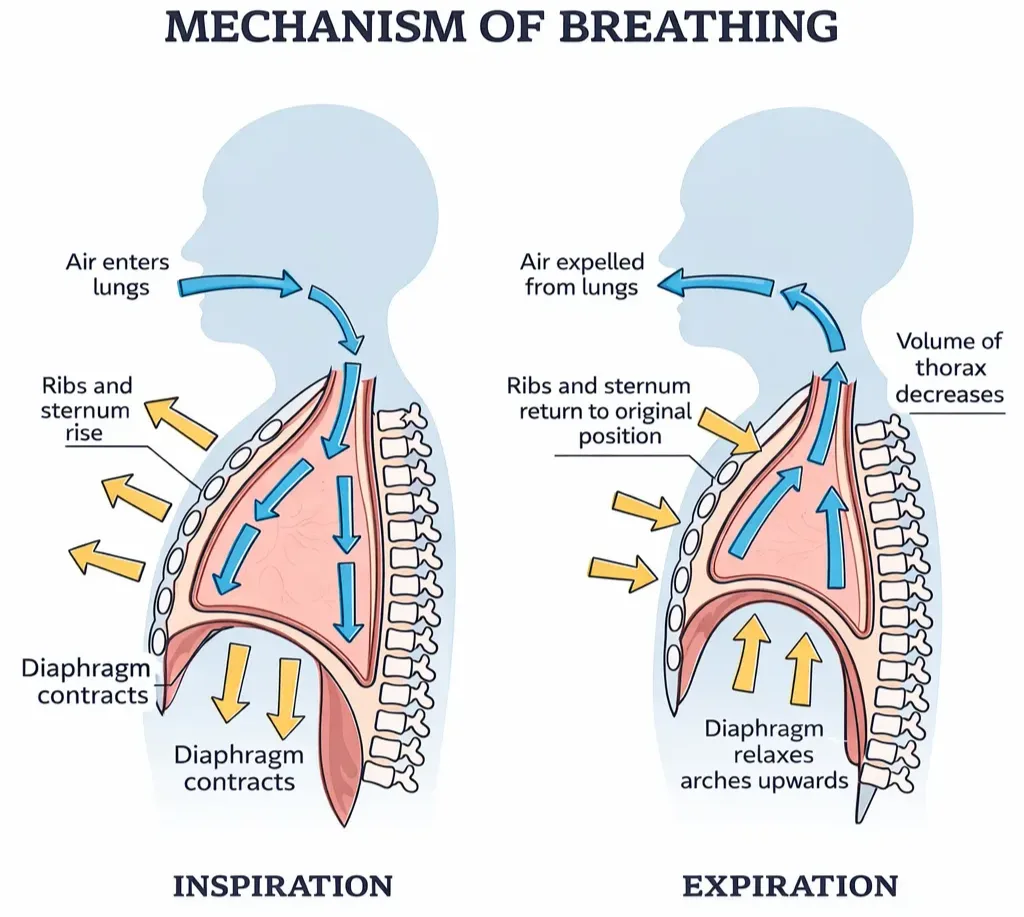
- Breathing Mechanics
- Interpleural space contains fluid, lubricates pleura
- Inhalation: active, diaphragm & external intercostals contract → intrathoracic volume ↑ → pressure ↓ → lungs expand
- Exhalation: usually passive, internal intercostals assist, chest wall recoils
- Emphysema: alveolar wall destruction → reduced elastic recoil
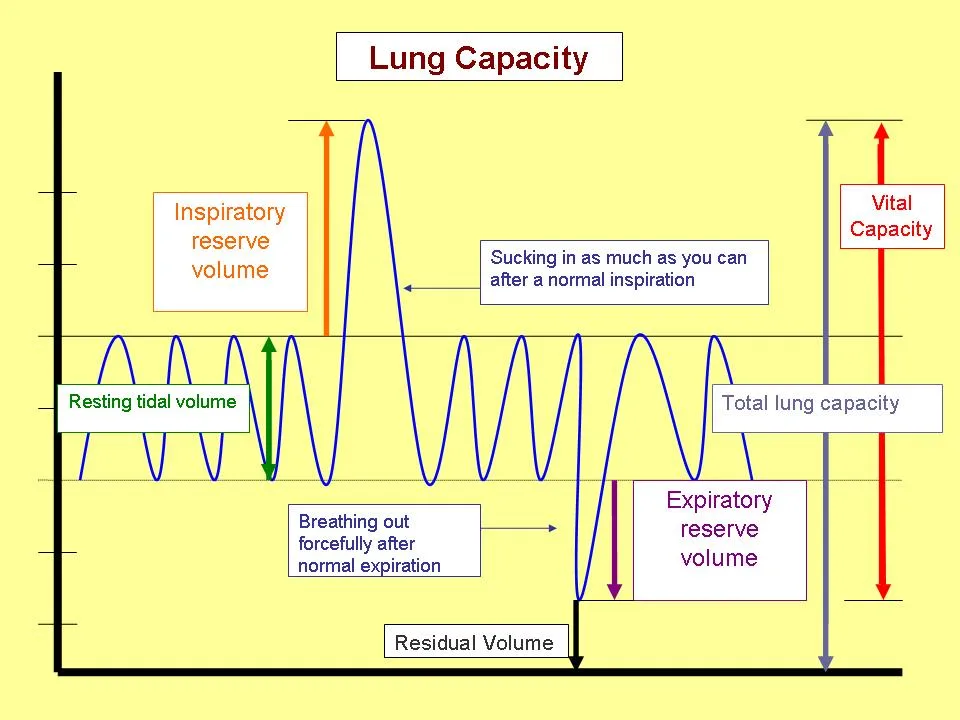
- Lung Capacities
- TLC (total lung capacity): 6–7 L, cannot measure with spirometry (RV included)
- RV (residual volume): air remaining after full exhale, cannot measure with spirometry
- VC (vital capacity) = TLC - RV
- TV (tidal volume): normal inhale/exhale
- ERV (expiratory reserve volume): forcibly exhaled
- IRV (inspiratory reserve volume): forcibly inhaled
- Decreased in stiff lung tissue (e.g., pulmonary fibrosis)
- Regulation of Breathing
- Controlled by medulla oblongata (ventilation center)
- Chemoreceptors sensitive to CO2
- Hypercapnia → ↑ respiratory rate
- Severe hypoxemia → ↑ respiratory rate
- Conscious control possible
6.2 Functions of the System
Covers primary functions of the respiratory system: gas exchange, thermoregulation, immune defense, and pH control.
- Gas Exchange
- Capillaries bring deoxygenated blood from right ventricle to alveoli
- Alveoli walls: 1 cell thick → efficient diffusion along concentration gradients
- Higher altitudes: ↑ breathing rate, Hb unloading affected, ↑ RBC and blood vessels
- Thermoregulation
- Vasodilation/vasoconstriction of nasal/tracheal capillaries
- Shivering, sweating, panting
- Immune Function
- Nasal cavity: first line of defense
- Vibrissae trap particulates
- Lysozyme attacks gram-positive bacteria
- Cilia propel mucus to oral cavity (mucociliary elevator)
- Macrophages engulf pathogens
- IgA antibodies protect against pathogens
- Mast cells with preformed antibodies → allergic reactions
- Nasal cavity: first line of defense
- Control of pH
- Bicarbonate buffer system:
- Maintains blood pH 7.35–7.45
- Acidemia → ↑ respiratory rate
- Alkalemia → ↓ respiratory rate (retain CO2)
Spotted something wrong or unclear? Tell us — these notes are revised continuously.