
MCAT Psychology & Sociology · Lesson 1
Biology and Behavior
4 min read6 sectionsUpdated
6 sections
1.1 Brief History of Neuropsychology
This section outlines key historical figures and their contributions to understanding brain function, structure, and behavior, from early phrenology to modern insights into synapses and functionalism.
- Franz Gall
- Earliest theory linking behavior, intellect, personality to brain anatomy
- Doctrine of phrenology: well-developed traits → brain part expands → could measure by feeling skull
- Later proven inaccurate ("fake news")
- Pierre Flourens
- Studied brain function via extirpation (ablation) in rabbits and pigeons
- Removal of parts weakened specific brain functions
- William James
- Father of American psychology
- Functionalism: how mental processes help people adapt
- John Dewey
- Key figure in functionalism, 1896 article
- Criticized reflex arc approach; advocated for studying organism as a whole
- Paul Broca
- Examined lesion patients
- Left brain lesion → speech impairment (Broca's area)
- Hermann von Helmholtz
- Measured speed of nerve impulse
- Transitioned psychology into natural science
- Sir Charles Sherrington
- Inferred existence of synapses
- Initially thought to be electrical; now known to be chemical
1.2 Organization of Nervous System
Overview of CNS and PNS structures, neuron types, reflex arcs, and autonomic subdivisions regulating involuntary processes.
- Neuron Types
- Sensory (afferent): receptors → spinal cord
- Motor (efferent): brain → muscles/glands
- Interneurons: between neurons, most abundant, reflexive behavior
- Reflex Arcs
- Quick response to stimuli (e.g., stepping on nail)
- Involve all neuron types
- Central vs Peripheral
- CNS: brain + spinal cord
- PNS: somatic + autonomic
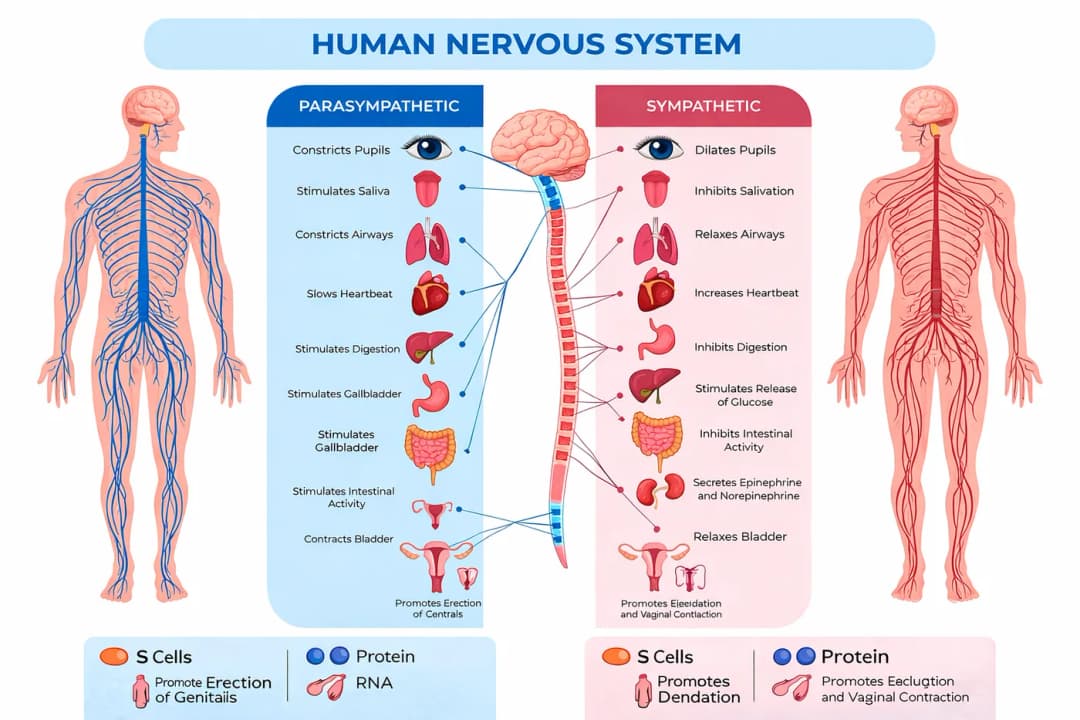
- Autonomic Nervous System (ANS)
- Regulates respiration, digestion, temperature
- Parasympathetic: conserves energy, Ach
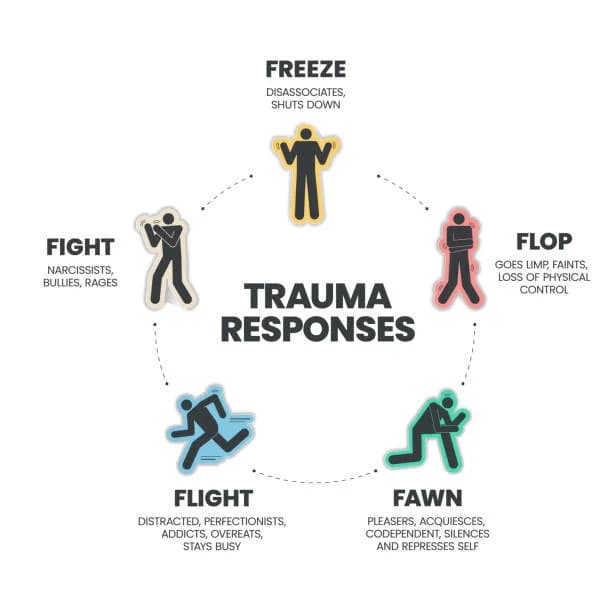
- Sympathetic: activated by stress, NE & E, fight-or-flight
1.3 Organization of Brain
Describes brain protection, divisions, prenatal development, and methods for studying brain function.
- Protection
- Meninges: dura mater, arachnoid mater, pia mater
- Produce and reabsorb CSF
- Brain Divisions
- Hindbrain: cerebellum, medulla oblongata, reticular formation
- Midbrain: inferior/superior colliculi
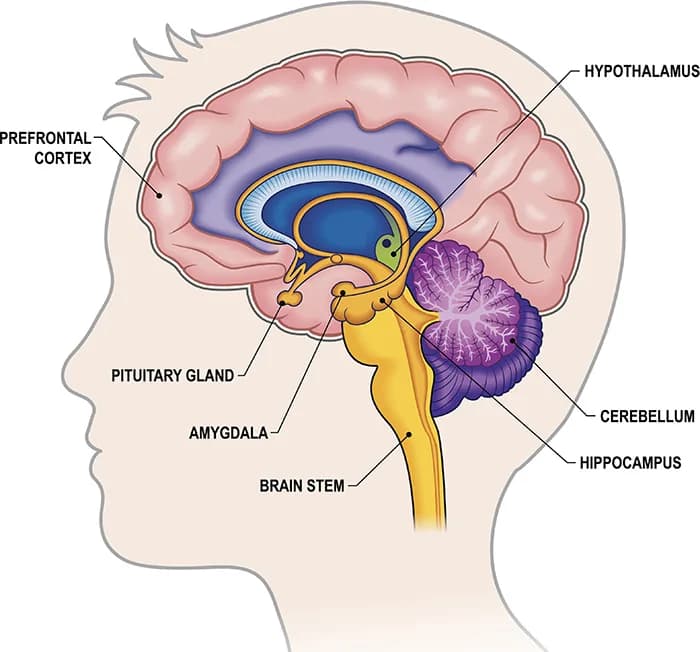
- Forebrain: cerebral cortex, limbic system, thalamus, hypothalamus
- Prenatal Formation
- Neural tube → 3 swellings → hindbrain + forebrain separate → 5 swellings
- Hindbrain → myelencephalon (medulla) + metencephalon (pons/cerebellum)
- Medulla: vital functions
- Pons: pathways cortex ↔ medulla
- Cerebellum: posture, balance, coordination (alcohol impairs)
- Midbrain (Mesencephalon)
- Above hindbrain
- Involuntary reflexes: superior colliculus (visual), inferior colliculus (auditory)
- Forebrain (Prosencephalon)
- Complex perceptual, cognitive, behavioral processes
- Telencephalon: cortex, basal ganglia, limbic
- Diencephalon: thalamus, hypothalamus, posterior pituitary
- Methods of Mapping
- Lesion patients/animals
- Electrical stimulation
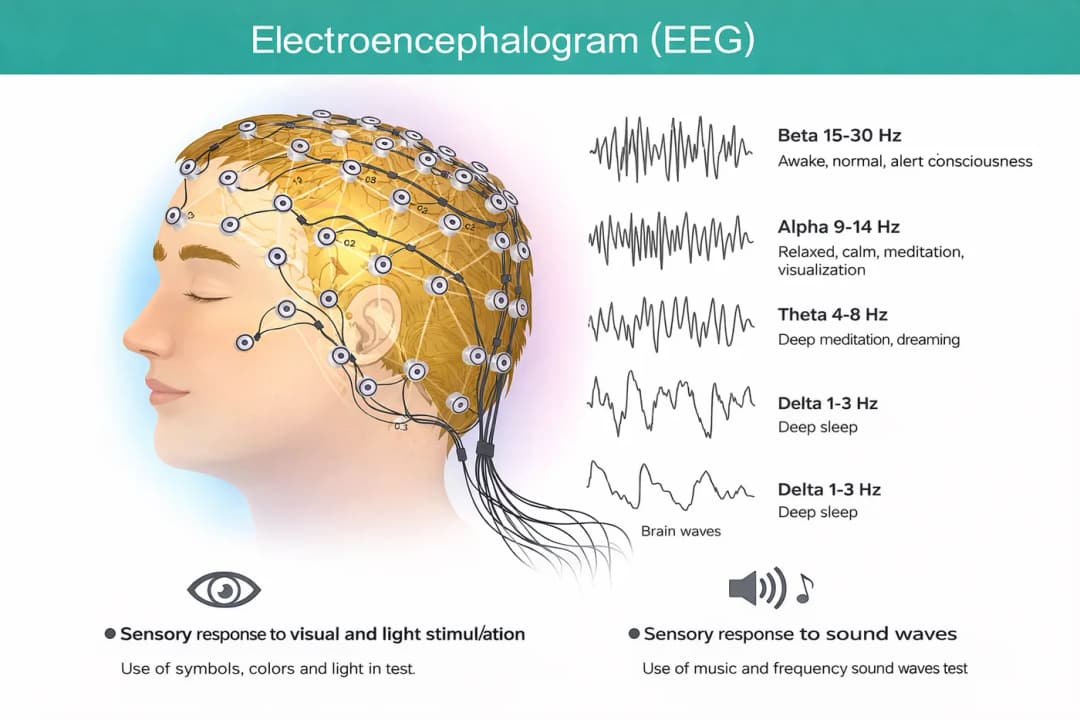
- Electroencephalogram (EEG)
- Regional cerebral blood flow (rCBF)
- Imaging: CT, PET, MRI, fMRI
1.4 Parts of the Forebrain
Details forebrain substructures and their roles in sensory processing, movement, emotion, and higher cognition.
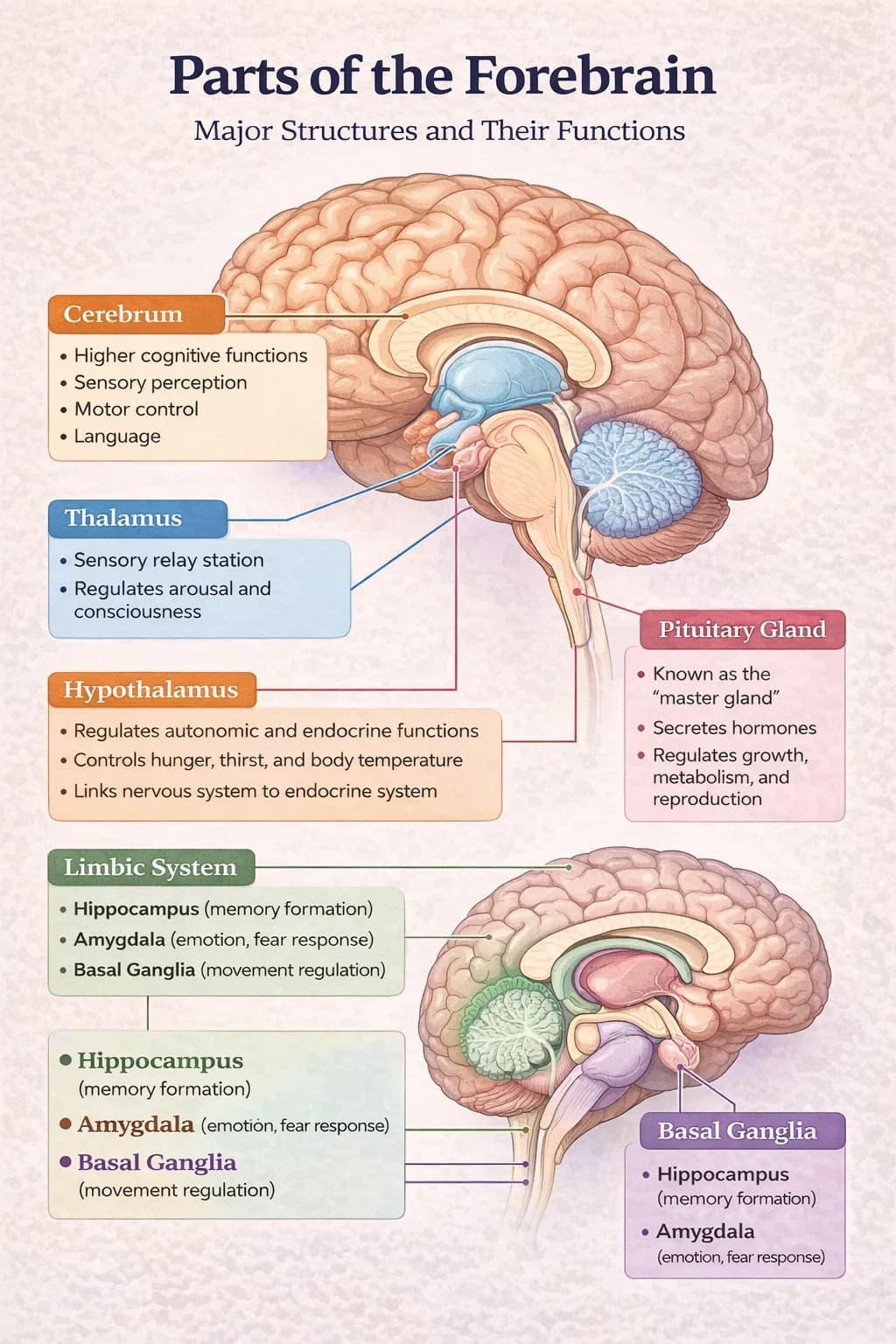
- Thalamus
- Sensory relay for all senses except smell
- Hypothalamus
- Lateral (LH) → hunger; destruction → cessation eating/drinking
- Ventromedial (VMH) → satiety; lesions → obesity
- Anterior (AH) → sex behavior; stimulation → excessive mounting
- Diencephalon
- Posterior pituitary releases ADH, oxytocin
- Pineal gland → melatonin, circadian rhythms
- Basal Ganglia
- Coordinates muscle movement, smooths motion
- Parkinson's disease → dysfunction
- Limbic System
- Septal nuclei: pleasure centers
- Amygdala: defensive, aggressive behaviors
- Hippocampus: learning, memory (communicates via fornix)
- Cerebral Cortex
- Neocortex with sulci & gyri, increases surface area
- Frontal Lobe: prefrontal cortex (executive function), motor cortex (precentral gyrus), Broca's area (speech)
- Parietal Lobe: postcentral gyrus
- Occipital Lobe: visual (striate) cortex
- Temporal Lobe: auditory cortex, Wernicke's area
- Cerebral Hemispheres
- Contralateral control
- Ipsilateral examples: hearing
- Dominant (usually left): analytic
- Nondominant (usually right): intuition, creativity, sense of direction
1.5 Influences on Behavior
Discusses neurotransmitters, endocrine system, and genetic vs environmental influences on behavior.
- Neurotransmitters
- Ach: nerve impulses to muscles; CNS attention/arousal; loss → Alzheimer's
- E & NE: catecholamines; alertness, wakefulness; high → anxiety/mania; low → depression
- Dopamine: movement/posture; basal ganglia; Parkinson's disease → loss
- Serotonin: mood, behavior, eating, sleeping; oversupply → mania, undersupply → depression
- GABA & Glycine: inhibitory
- Glutamate: excitatory
- Peptides: endorphins/enkephalins → painkillers
- Endocrine System
- Hormone-based, slower signaling
- Hypothalamus → pituitary → other endocrine glands
- Adrenal glands: medulla (E, NE), cortex (corticosteroids, T, E)
- Gonads: sex hormones
- Genetics & Behavior
- Innate vs learned behavior
- Adaptive value → fitness → natural selection
- Family studies, twin studies (MZ vs DZ), adoption studies
1.6 Development
Covers prenatal neural development, infant motor and reflex milestones, and social development through childhood.
- Prenatal
- Neurulation (3–4 weeks): ectoderm → neural groove → neural tube
- Neural crest → diverse tissues
- Alar plate → sensory neurons; basal plate → motor neurons
- Placenta: nutrient, oxygen, water transport; drugs/diseases → defects
- Motor Development
- Reflexes: rooting, suckling, swallowing, Moro, Babinski, grasping
- Timing: Moro disappears ~4 months
- Other coordinated movements develop with myelination
- Social Development
- Stranger/separation anxiety: 7–12 months
- Play: solitary → onlooker → parallel (~2 years)
- Gender identity: ~3 years
- Peer conformity/romantic feelings: ~5 years
- Same-sex friendships: 6–12 years
- Teenage years: self-sufficiency, sexual relationships begin
Spotted something wrong or unclear? Tell us — these notes are revised continuously.