
MCAT Psychology & Sociology · Lesson 2
Sensation and Perception
3 min read5 sectionsUpdated
5 sections
2.1 Sensation vs Perception
This section differentiates sensation (conversion of stimuli into electrical signals) from perception (processing and comprehension of sensory information), and introduces sensory pathways, thresholds, and adaptation mechanisms.
- Sensory Pathway
- Sensory receptor → efferent neuron → sensory ganglion → spinal cord → brain
- Stimuli
- Distal: outside body (e.g., campfire)
- Proximal: directly interact with body (e.g., photoreceptors)
- Ganglia
- Collections of cell bodies outside CNS
- Signals sent to projection areas in brain
- Thresholds
- Absolute: minimum stimulus to activate system (e.g., teaspoon sucrose in 2 gallons water)
- Threshold of conscious perception: minimal stimulus detected consciously
- Subliminal perception: stimulus below conscious threshold, reaches CNS
- Discrimination Testing
- Detect differences between stimuli (e.g., shade changes)
- Difference threshold / Just noticeable difference (JND): minimum detectable difference
- Weber’s law: constant ratio
- Signal Detection Theory
- Perception changes with internal/external context
- Catch trials: stimulus presented
- Noise trials: stimulus absent
- Outcomes: hits, misses, false alarms, correct negatives
- Adaptation
- Sensory systems adjust to constant stimuli
2.2 Vision
Covers the anatomy and physiology of the eye, visual pathways, retinal processing, and feature detection.
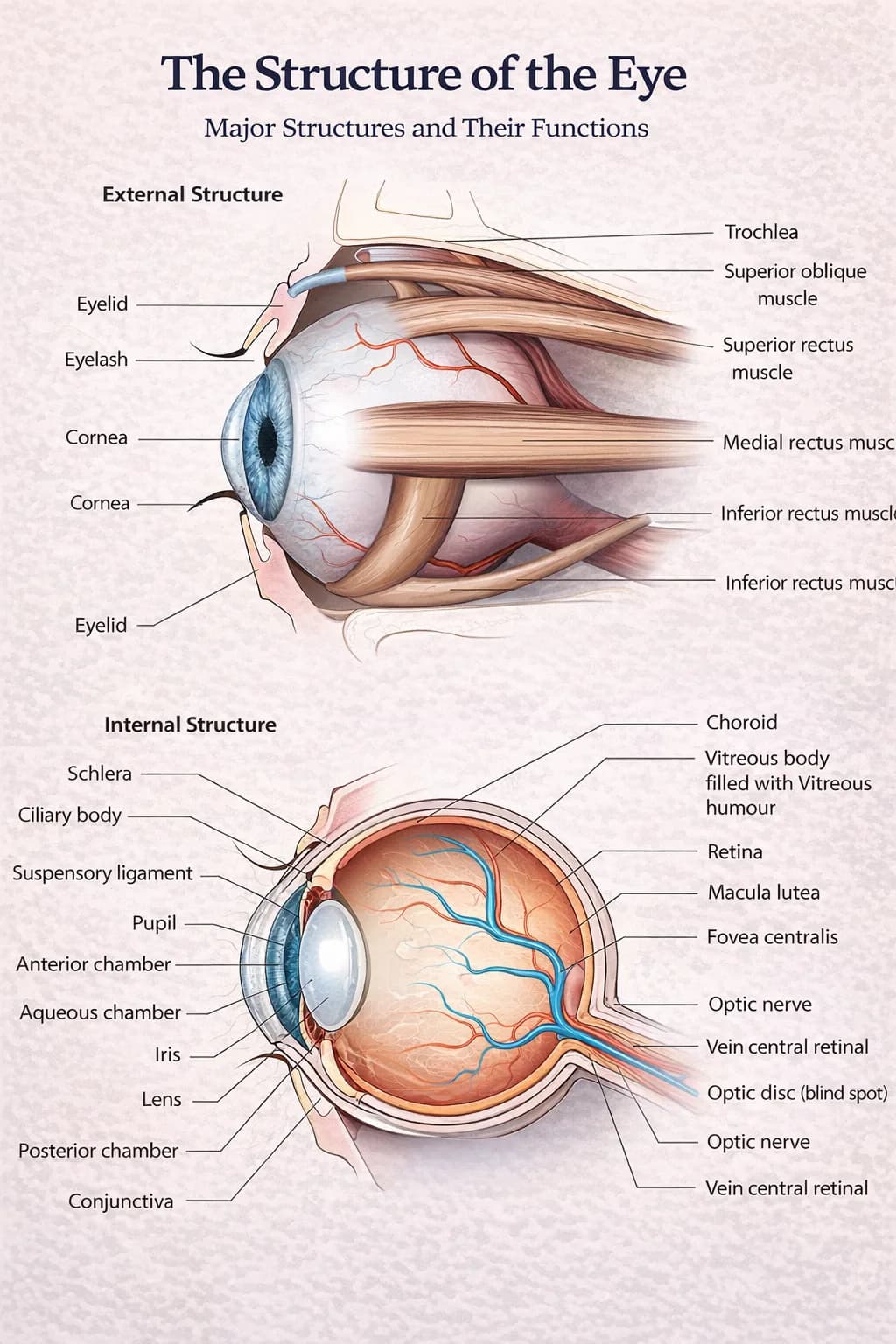
- Eye Anatomy
- Sclera: thick structural layer, white of eye
- Chambers: anterior (in front of iris), posterior (behind iris to lens)
- Iris: dilator pupillae (symp → dilates), constrictor pupillae (parasymp → constricts)
- Ciliary body: produces aqueous humor → canal of Schlemm
- Lens: shape adjusted via suspensory ligaments (accommodation)
- Vitreous humor: supports retina
- Retina
- Part of CNS, outgrowth of brain
- Duplexity theory: rods (120 mil) vs cones (6 mil)
- Rods: low sensitivity, rhodopsin
- Cones: high acuity, color vision
- Macula: central retina, high cone density
- Fovea: only cones, center of macula
- Visual Pathway
- Cornea → pupil → lens → vitreous humor → retina → bipolar cells → ganglion cells → optic nerve → optic chiasm (nasal cross) → optic tract → LGN → occipital lobe
- Superior colliculus: eye movement control
- Processing
- Parallel processing: analyze color, shape, motion simultaneously
- Feature detection
- Shape: parvocellular cells (high color/spatial resolution, low temporal)
- Motion: magnocellular cells (high temporal, low spatial → blurry)
2.3 Hearing and Vestibular Sense
Explains ear anatomy, auditory and vestibular processing, hair cell function, and neural pathways for hearing and balance.
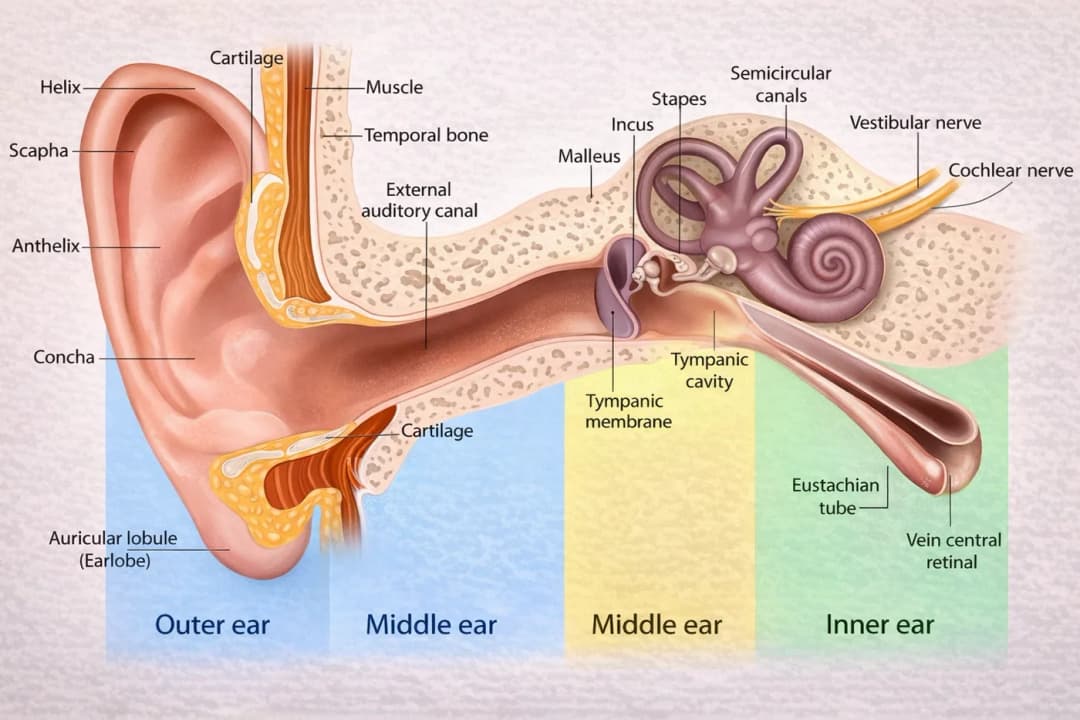
- Outer/Middle/Inner Ear
- Pinna → tympanic membrane → malleus, incus, stapes → oval window
- Eustachian tube: pressure equalization
- Cochlea
- 3 scalae, K⁺ rich endolymph, perilymph in bony labyrinth
- Basilar membrane moves, round window compensates
- Vestibular System
- Vestibule: utricle, saccule → linear acceleration
- Hair cells with otoliths bend to signal balance
- Semicircular canals: rotational acceleration, each ends in ampulla
- Auditory Pathways
- Vestibulocochlear nerve → brainstem → MGN → auditory cortex
- Superior olive: sound localization
- Inferior colliculus: startle reflex
- Hair Cells
- Stereocilia → pitch detection
- High pitch → near oval window
- Low pitch → apex
2.4 Other Senses
Overview of olfactory, gustatory, somatosensory, and kinesthetic senses, including receptors, pathways, and perceptual thresholds.
- Smell
- Olfactory chemoreceptors in nasal epithelium
- Pheromones (animal communication)
- Olfactory bulb → olfactory tract
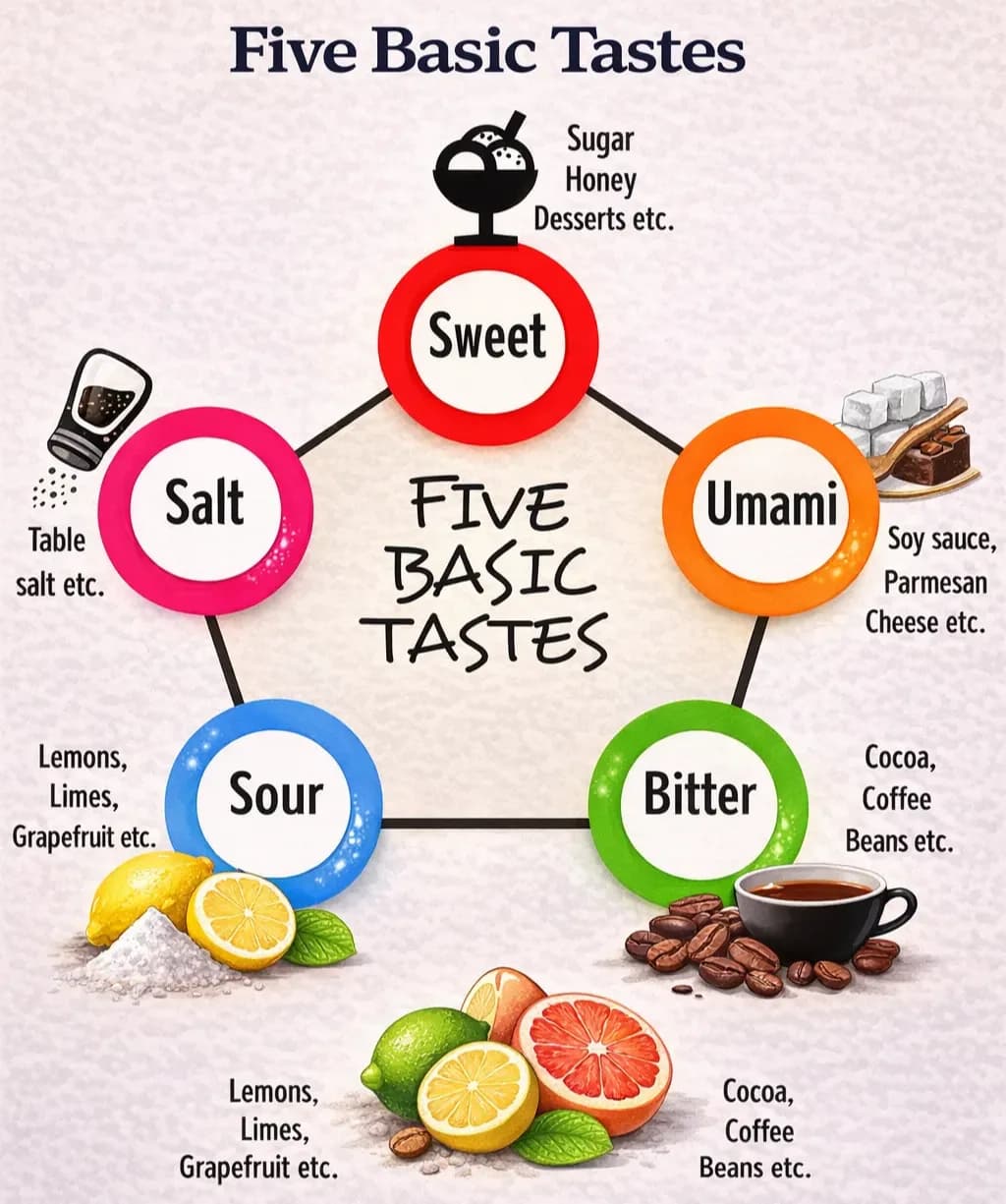
- Taste
- 5 types: sweet, sour, salty, bitter, umami
- Detected by taste buds on papillae
- Brainstem → thalamus → taste center
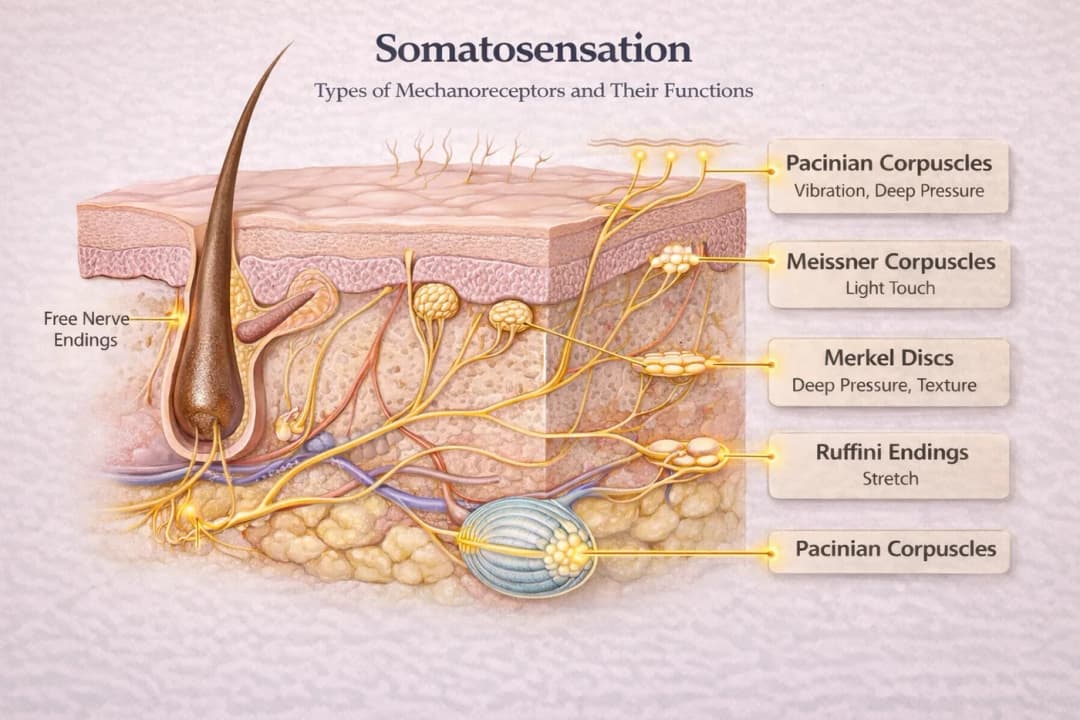
- Somatosensation
- Touch modalities:
- Pacinian corpuscles: vibration, deep pressure
- Meissner corpuscles: light touch
- Merkel discs: deep pressure, texture
- Ruffini endings: stretch
- 2-point threshold depends on nerve density
- Temperature: physiological 0 (89–97°F)
- Pain: nociceptors, gating mechanisms
- Touch modalities:
- Kinesthetic Sense
- Proprioception, body position awareness
2.5 Object Recognition
Discusses bottom-up vs top-down processing, perceptual organization, depth cues, and Gestalt principles for interpreting visual stimuli.
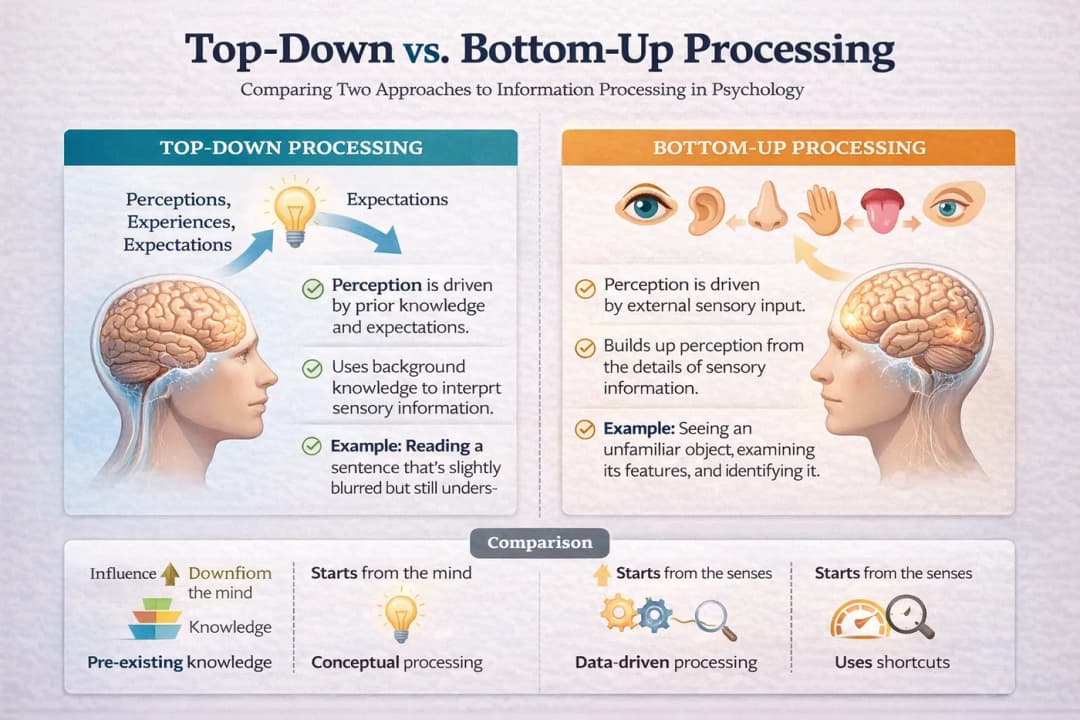
- Processing Types
- Bottom-up: object recognition from features, slower
- Top-down: memory/expectations → rapid recognition
- Déjà vu: top-down processing
- Perceptual Organization
- Combine bottom-up & top-down
- Depth perception: binocular & monocular cues
- Form perception: parallel processing
- Constancy: objects perceived as same despite changes
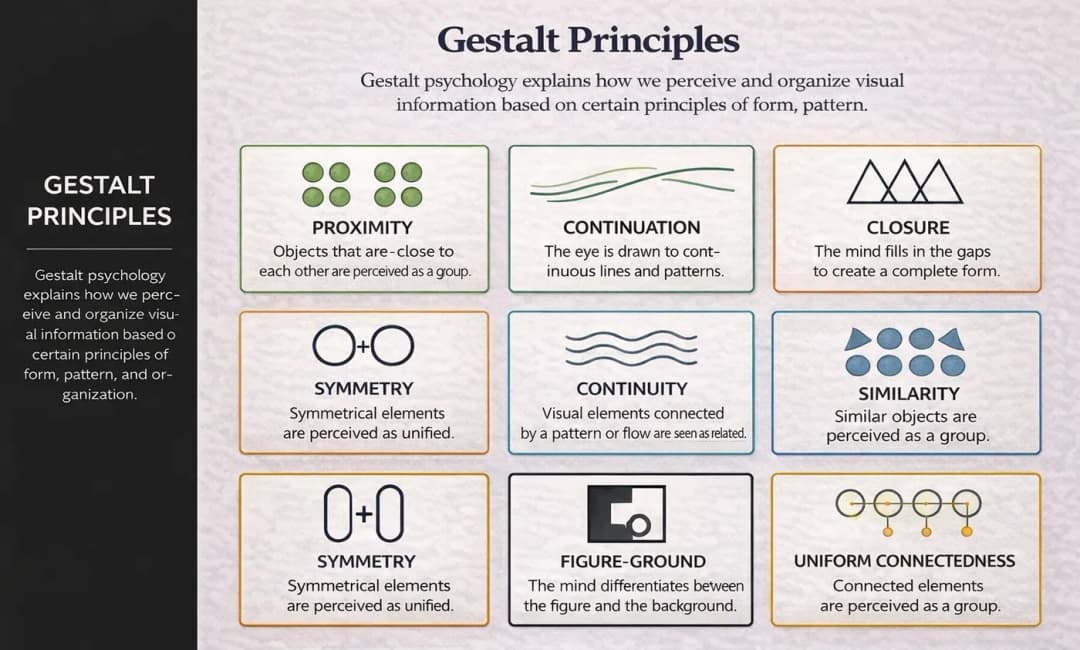
- Gestalt Principles
- Law of Proximity: nearby elements grouped
- Law of Similarity: similar objects grouped
- Law of Good Continuation: follow continuous patterns
- Subjective Contours: perceive shapes not present
- Law of Closure: perceive enclosed space as complete
- Governed by Law of Pragnanz: perception favors simplicity, regularity, symmetry
Spotted something wrong or unclear? Tell us — these notes are revised continuously.